Why Kuala Lumpur Is Becoming America's Next Tech Talent Capital—And How to Position Yourself for What's Coming
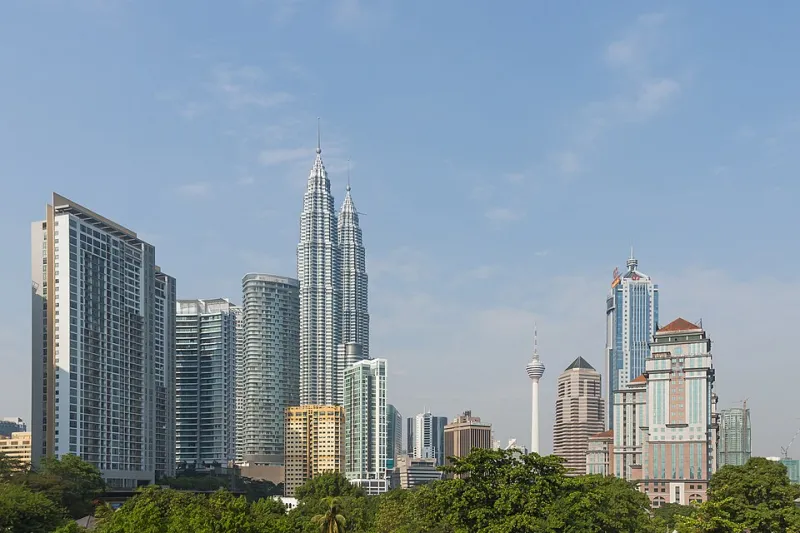
Photo: CEphoto, Uwe Aranas, CC BY-SA 3.0, via Wikimedia Commons
For years, the conversation about global tech expansion centered on Bangalore, Singapore, and Warsaw. Kuala Lumpur rarely entered that discussion. That is changing—and the pace of change is accelerating faster than most Malaysian professionals realize.
US technology firms, from established enterprise software companies to venture-backed startups scaling their engineering teams, are making deliberate decisions to plant operational roots in Malaysia. The reasons are structural, not circumstantial. And for members of the SP Society Malaysia network, the implications extend well beyond national pride.
The Economics That US Companies Cannot Ignore
Cost efficiency remains the foundational driver. Engineering talent in Kuala Lumpur commands salaries that are, on average, 60 to 70 percent lower than equivalent roles in San Francisco or Seattle—without a proportional reduction in output quality. For a US company running a 20-person R&D team, that differential translates into millions of dollars in annual savings that can be redirected toward product development, marketing, or runway extension.
But cost alone rarely sustains a strategic decision. What reinforces the economics is infrastructure. Malaysia's digital infrastructure has matured significantly over the past decade. The Multimedia Super Corridor, established in the late 1990s, laid the groundwork for a regulatory and physical environment that accommodates technology operations at scale. Today, Kuala Lumpur offers reliable high-speed connectivity, modern co-working ecosystems, and a business registration process that US companies find navigable compared to other Southeast Asian markets.
Tax incentives further sweeten the proposition. Malaysia's government has actively courted foreign direct investment in the technology sector, offering targeted incentives to companies that establish qualifying R&D operations. For a US CFO evaluating international expansion, these factors combine into a compelling financial narrative.
The Talent Equation: What American Hiring Managers Are Discovering
Beyond cost, US technology companies are encountering something they did not fully anticipate: a deep reservoir of technically proficient, English-fluent engineers and researchers who are accustomed to working within international frameworks.
Malaysia's university system produces tens of thousands of STEM graduates annually. A significant proportion of these graduates hold degrees from institutions with strong ties to British and Australian academic traditions, giving them an educational foundation that transfers readily into US corporate environments. Many have completed internships or short-term placements with multinational firms, meaning they arrive with exposure to Western professional norms.
For US hiring managers reading this, the practical implication is straightforward: Kuala Lumpur is not a fallback option when US talent is unavailable. It is an increasingly deliberate first choice for companies that want to build high-quality technical teams without the cost and competition that define hiring in American tech hubs.
The Timezone Advantage That Rarely Gets Discussed
One underappreciated dimension of Malaysia's appeal is its timezone positioning. Kuala Lumpur operates on UTC+8, which creates a natural overlap with US Pacific time during early morning hours. More significantly, it enables a genuine follow-the-sun operating model for companies with teams distributed across the US, Europe, and Asia-Pacific.
For product companies that need continuous development cycles or customer support coverage, this geographic positioning is operationally valuable. It is not a workaround—it is an architecture. Teams in Kuala Lumpur can hand off to counterparts in London and then to colleagues in Austin or New York, creating a development pipeline that never fully sleeps.
What This Means If You Are in Malaysia Right Now
If you are a Malaysian professional currently based in Kuala Lumpur, the establishment of US tech R&D centers in your city represents one of the most significant career opportunities of this decade. These are not outsourcing arrangements or back-office support functions. Companies like to call them centers of excellence, and increasingly, that label is accurate.
Roles being filled at these facilities span the full spectrum of technical and professional functions: software engineering, data science, machine learning research, product management, UX design, and increasingly, leadership positions that carry genuine organizational authority. The career trajectories available within these structures can rival—and in some cases exceed—what was previously achievable only through emigration.
For SP Society Malaysia members, the strategic move is to align your professional development with the specific capabilities these companies are seeking. Cloud infrastructure expertise, proficiency in enterprise software stacks, and experience with agile development methodologies are consistently in demand. Beyond technical skills, the ability to communicate fluently across cultural and organizational lines is a quality that US companies explicitly value when building internationally distributed teams.
What This Means If You Are Already in the United States
For Malaysian professionals currently working in the US, the growth of American tech operations in Kuala Lumpur opens a different but equally significant set of possibilities. Companies with R&D centers in Malaysia frequently need professionals who can serve as cultural and operational bridges—individuals who understand both the American corporate context and the Malaysian professional environment.
These bridge roles, whether formal or informal, carry real career weight. Being the person who can manage relationships between a US headquarters and a Kuala Lumpur R&D team is a form of organizational leverage that is difficult to replicate. If you are a Malaysian professional working in a US tech company that has, or is considering, Malaysian operations, this is the moment to make your background explicitly visible to leadership.
Network through SP Society Malaysia's cross-border connections to identify which US companies are actively building in Malaysia. Position your cultural fluency and regional knowledge not as personal background, but as institutional value.
How to Prepare: Practical Steps for SP Society Malaysia Members
The window of early-mover advantage does not remain open indefinitely. Here is how to act on this trend before it becomes conventional wisdom:
Audit your technical profile against US market standards. Review job postings from US tech companies with Malaysian operations and identify gaps in your skill set. Certifications from AWS, Google Cloud, or Microsoft Azure carry significant weight with US hiring managers.
Build visibility within the right professional communities. LinkedIn remains the primary professional network through which US companies discover international talent. Ensure your profile reflects not only your technical capabilities but your experience working within or alongside international teams.
Engage with SP Society Malaysia's professional network. Members who have direct experience with US tech companies operating in Malaysia are a resource. Their insights into hiring processes, organizational culture, and career pathways are more current and specific than anything a job board can provide.
Consider the leadership track, not just the technical one. The most durable career opportunities in US-affiliated R&D centers are not purely technical. Professionals who can manage teams, communicate across organizational hierarchies, and translate between cultural contexts will be the ones who define the next generation of leadership in these facilities.
Kuala Lumpur's emergence as a destination for US tech investment is not a temporary phenomenon. The structural factors driving it—cost, talent, infrastructure, and timezone—are durable. For Malaysian professionals, the question is not whether this trend will create opportunity. It already is. The question is whether you are positioned to claim it.