The Professional Strengths You Did Not Know You Had: A Malaysian's Guide to Standing Out in the American Workplace

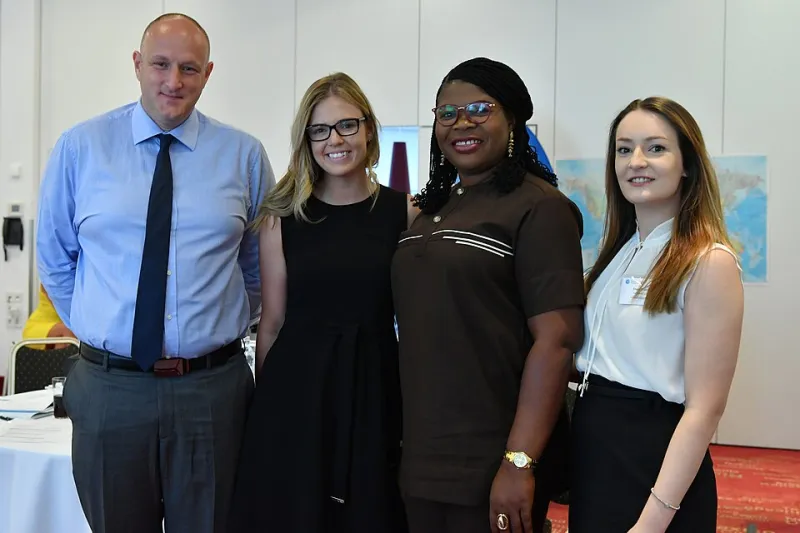
Photo: diverse professional business meeting multicultural team office, via img.freepik.com
There is a particular kind of professional invisibility that affects many Malaysian newcomers to the American corporate world. It is not the result of inadequate skills or insufficient qualifications. It is the result of carrying significant professional assets without a language or framework for articulating them.
American workplaces reward self-advocacy. They reward the ability to name your value clearly, confidently, and early. For professionals raised in a Malaysian context—where competence is expected to speak for itself and where overt self-promotion carries social risk—this cultural expectation can feel not merely uncomfortable but fundamentally dishonest.
The solution is not to abandon your values. It is to develop a precise vocabulary for the genuine strengths you bring, and to deploy that vocabulary strategically. SP Society Malaysia has observed this challenge across hundreds of member interactions, and the pattern is consistent enough to warrant a direct, practical response.
Multilingualism as a Business Asset, Not a Personal Detail
Most Malaysian professionals are functionally multilingual. English, Bahasa Malaysia, Mandarin, and Tamil coexist within a single professional's daily communication landscape in ways that are entirely unremarkable in a Malaysian context. In an American one, they are extraordinary.
The mistake many Malaysian professionals make is treating language ability as biographical background rather than business capability. On a resume, it appears as a line item under "Additional Skills." In an interview, it surfaces as a footnote. This positioning undersells what is actually a commercially valuable competency.
Consider reframing multilingualism in terms of market access. A Malaysian professional who speaks Mandarin is not simply bilingual—they are a direct communication channel into Chinese-speaking business communities across Southeast Asia, Greater China, and Chinese diaspora networks in North America. For US companies with Asia-Pacific operations or ambitions, this is a pipeline asset. State it as such.
In interviews, practice responses that connect your language capabilities to business outcomes: "My ability to communicate directly in Mandarin allowed our team to resolve a client concern in Singapore without involving a translator, which preserved the relationship and shortened the resolution timeline." Specificity transforms a credential into a story, and stories are what American hiring managers remember.
Cross-Cultural Adaptability: The Competency That US Companies Are Actively Seeking
Malaysia's multiethnic, multireligious social fabric produces professionals who have spent their entire lives navigating difference. Navigating different communication styles, different assumptions about authority, different approaches to conflict, and different expectations around social interaction is not a skill Malaysian professionals had to acquire through training. It is a product of the environment they grew up in.
This form of cultural fluency is precisely what US companies are investing significant resources to develop through diversity, equity, and inclusion programs. Malaysian professionals often arrive with the output of those programs already internalized.
The challenge, again, is articulation. American corporate culture has a specific vocabulary for cross-cultural competency: terms like "cultural intelligence," "inclusive leadership," and "stakeholder alignment across diverse teams" carry weight in performance reviews and promotion conversations. Learning to map your lived experience onto this vocabulary is not a form of translation—it is an act of professional self-representation.
When updating your LinkedIn profile or preparing for a performance review, review the language your company uses around diversity and cross-cultural collaboration. Then identify specific instances from your career where you demonstrated those competencies. The experience is real. The task is making it legible within the American professional lexicon.
Hierarchical Communication Expertise in a Flat-Structure Environment
This is perhaps the most nuanced strength that Malaysian professionals carry, and it requires the most careful handling.
Malaysian professional culture is broadly high-context and hierarchically oriented. Communication tends to be indirect, particularly when delivering criticism or disagreement upward. Deference to seniority is built into professional interactions in ways that are structural rather than merely polite. This stands in notable contrast to many American corporate environments, which espouse flat hierarchies, radical candor, and direct feedback as organizational virtues.
For Malaysian professionals, this contrast can feel like a deficit. It is not. It is a versatility.
Professionals who have operated within hierarchical structures develop a sophisticated understanding of how organizational authority actually functions—as opposed to how it is described in company values statements. They understand that managing upward requires different skills than managing downward, that institutional relationships require maintenance, and that the path to influence in any organization runs through people, not processes.
In American workplaces, this translates into a capacity for stakeholder management that many colleagues—particularly those who have only ever worked within flat-structure environments—have not developed. The practical application is in roles that require cross-functional coordination, client relationship management, or any position that requires building consensus across organizational levels.
The reframe here is from "I am accustomed to deferring to authority" to "I have extensive experience navigating complex organizational hierarchies and managing relationships at multiple levels of seniority."
Consensus-Building in a Culture That Rewards Individual Initiative
Related to hierarchical awareness is a broader orientation toward collective decision-making that characterizes much of Malaysian professional culture. The concept of muafakat—reaching decisions through consultation and consensus—is embedded in Malaysian organizational behavior in ways that persist even in secular, corporate contexts.
American corporate culture, particularly in technology and entrepreneurial environments, places a premium on individual initiative, decisive action, and the willingness to move fast. This can make consensus-oriented professionals appear hesitant or indecisive to American managers who do not understand the cultural logic behind the behavior.
The strategic response is twofold. First, develop comfort with communicating your decision-making process explicitly. American managers who understand that you are building consensus—rather than simply delaying—will interpret the behavior differently. Second, recognize that consensus-building is a genuine competitive advantage in roles that require team alignment, client management, or cross-departmental project leadership. These are contexts where moving too fast creates more problems than it solves, and where the Malaysian professional's instinct toward consultation is organizationally valuable.
Translating These Strengths Into Interview Performance
Recognizing your strengths is necessary but insufficient. The professional environment in which SP Society Malaysia members are competing requires that these strengths be communicated clearly and confidently in high-stakes moments.
For interviews, adopt the STAR framework (Situation, Task, Action, Result) as a structure for delivering stories that connect your Malaysian professional background to concrete business outcomes. Each story should be specific enough to be credible and broad enough to be relevant across different organizational contexts.
For networking conversations, practice a professional narrative that positions your background as a deliberate asset rather than an interesting personal detail. The framing is not "I grew up in Malaysia, so I speak several languages." The framing is "My background gives me direct access to professional networks and communication channels across Southeast Asia and Chinese-speaking markets, which I have used to support business development in previous roles."
Building a Personal Brand That Reflects Your Full Professional Value
SP Society Malaysia's network exists precisely to support this kind of professional positioning. The community of Malaysian professionals across borders represents a collective knowledge base about what works, what does not, and how to navigate the specific challenges of entering and advancing within American corporate environments.
Your personal brand—the professional identity you project through your LinkedIn presence, your networking conversations, and your workplace behavior—should reflect the full range of what you bring. Not just your technical credentials, and not just your years of experience, but the distinctive combination of cultural intelligence, linguistic range, and cross-organizational fluency that defines the Malaysian professional at their best.
That combination is rare in American corporate environments. Name it. Own it. Deploy it.