From Kuala Lumpur to Silicon Valley—Without Buying a Plane Ticket
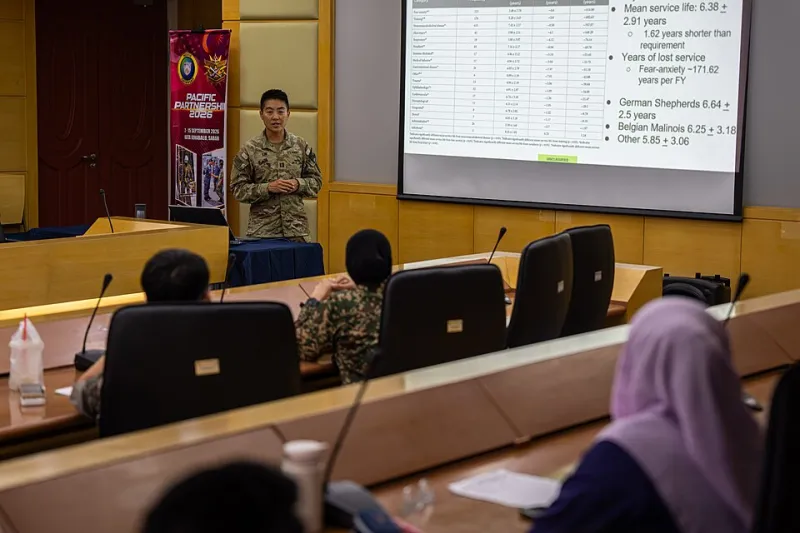
Photo: U.S. Navy photo by Petty Officer 2nd Class Moises Sandoval, Public domain, via Wikimedia Commons
For decades, the conventional wisdom was straightforward: if a Malaysian technology professional wanted to work for a leading American company, relocation was essentially non-negotiable. A visa application, a cross-Pacific move, and a complete uprooting of one's personal life were simply part of the price of admission. That calculus has changed dramatically.
Today, members of SP Society Malaysia are landing roles with US-headquartered firms—startups in Austin, established enterprises in New York, and technology giants in the San Francisco Bay Area—without ever surrendering their Malaysian residency. This shift is not a temporary anomaly born purely from pandemic-era necessity. It reflects a structural transformation in how American companies think about talent, productivity, and the boundaries of a functional workforce.
The Structural Shift American Employers Need to Understand
The United States is experiencing a well-documented shortage of qualified technology workers. According to the US Bureau of Labor Statistics, demand for software developers, data scientists, and information security analysts is projected to grow significantly faster than the average for all occupations over the coming decade. Domestic supply, despite robust university pipelines and immigration pathways, has not kept pace.
Malaysia, by contrast, produces tens of thousands of STEM graduates annually from institutions such as Universiti Malaya, Universiti Teknologi Malaysia, and a growing number of internationally accredited private universities. Many of these graduates possess strong English proficiency, familiarity with US business culture through multinational exposure, and technical skill sets that are immediately deployable in global roles.
For American employers willing to engage international contractors or full-time remote employees, this represents a compelling opportunity—and SP Society Malaysia has been at the forefront of helping both sides of that equation connect effectively.
Navigating the Legal and Contractual Landscape
One of the most common concerns raised by US companies considering Malaysian hires is the question of legal compliance. The good news is that the absence of a US work visa is not the obstacle it might appear to be when the professional remains based in Malaysia.
Malaysian professionals working remotely for American companies typically operate under one of two arrangements: as independent contractors invoicing through a Malaysian-registered entity, or as employees engaged via an Employer of Record (EOR) service. Platforms such as Deel, Remote, and Papaya Global have made EOR arrangements increasingly straightforward, handling local payroll compliance, statutory contributions to Malaysia's Employees Provident Fund (EPF), and SOCSO obligations on behalf of the US employer.
Critically, these arrangements do not require the Malaysian professional to obtain a US work visa, as they are not physically present in the United States performing work. SP Society members who have successfully navigated this path strongly recommend engaging a cross-border employment attorney early in the process to ensure both parties understand their obligations under Malaysian and US tax treaties.
Mastering the Time Zone Challenge
Perhaps the most frequently cited operational concern from US hiring managers is the time difference. Malaysia Standard Time (MST) runs 12 to 15 hours ahead of US time zones, depending on the coast and daylight saving adjustments. On the surface, this sounds daunting. In practice, SP Society members who have thrived in US remote roles describe it as a manageable—and sometimes advantageous—reality.
The most effective practitioners adopt what might be called a "deliberate overlap window." Rather than attempting to mirror a full US workday, they establish a dedicated four-to-five-hour window of synchronous availability that aligns with US morning hours—typically between 8:00 PM and midnight MST. Outside that window, deep-focus asynchronous work proceeds on deliverables, code reviews, and documentation.
Several SP Society members have noted that this structure actually enhances productivity. Work that requires concentration—architecture planning, complex debugging, data modeling—occurs during Malaysian daytime hours, free from the interruptions of a live US workday. Collaboration and meetings happen in the evening overlap. The key, as one senior software engineer who works with a Boston-based fintech firm described it, is "ruthless clarity about communication norms from day one."
Tools such as Loom for asynchronous video updates, Linear for project tracking, and Notion for documentation have become standard in the toolkits of Malaysian professionals working US remote roles.
Salary Negotiation: Positioning Value, Not Geography
One of the most consequential decisions a Malaysian professional makes when pursuing a US role is how to approach salary negotiation. The temptation to anchor compensation to Malaysian market rates can significantly undervalue one's contribution—and SP Society Malaysia actively counsels members against this approach.
US companies hiring internationally are not paying "local" rates as a default. Competitive employers understand that paying globally relevant compensation attracts globally relevant talent. The benchmark should be the role's value to the organization, not the cost of living in Petaling Jaya.
Practical guidance from experienced SP Society members includes researching US salary benchmarks on platforms such as Levels.fyi, Glassdoor, and LinkedIn Salary Insights before entering any negotiation. It also means articulating the specific value proposition clearly: deep expertise in a specialized domain, overlap-friendly working hours, strong written communication skills, and familiarity with agile and remote-first workflows.
One SP Society member—a data scientist now contracted to a healthcare analytics company in Chicago—negotiated a compensation package that placed her in the top quartile for her role nationally, by anchoring every discussion to market data rather than geography. "The moment I stopped thinking of myself as a Malaysian professional applying for a US job and started thinking of myself as a global professional solving a US company's problem," she noted, "the entire dynamic of the conversation changed."
What American Employers Should Know Before Reaching Out
For US companies considering Malaysian talent for the first time, a few practical considerations are worth noting. Malaysia operates under a common law legal system with English as the primary language of business and legal documentation, reducing friction in contract negotiations. The country's robust digital infrastructure—including high-speed broadband penetration and reliable cloud connectivity—supports the demands of modern remote work without the reliability concerns sometimes associated with other emerging markets.
Cultural alignment with US business norms tends to be strong among Malaysian professionals with multinational experience, though some adjustment in communication directness may be warranted on both sides. SP Society Malaysia offers onboarding resources and cross-cultural briefings for members preparing to engage US employers, ensuring that first impressions are professional and contextually informed.
A Community Built for This Moment
SP Society Malaysia exists precisely to support professionals navigating these complex, cross-border career journeys. Through peer networks, curated employer connections, and practical resources developed specifically for the realities of US-Malaysia professional engagement, the Society provides both the community and the infrastructure that individual professionals need to succeed.
The remote work revolution is not a temporary disruption. It is the new architecture of global professional life. Malaysian technology professionals are not waiting for the world to catch up—and increasingly, neither are the American companies smart enough to find them.