Beyond the H-1B Queue: How Malaysian Professionals Are Quietly Entering the US Job Market Through Remote Pathways
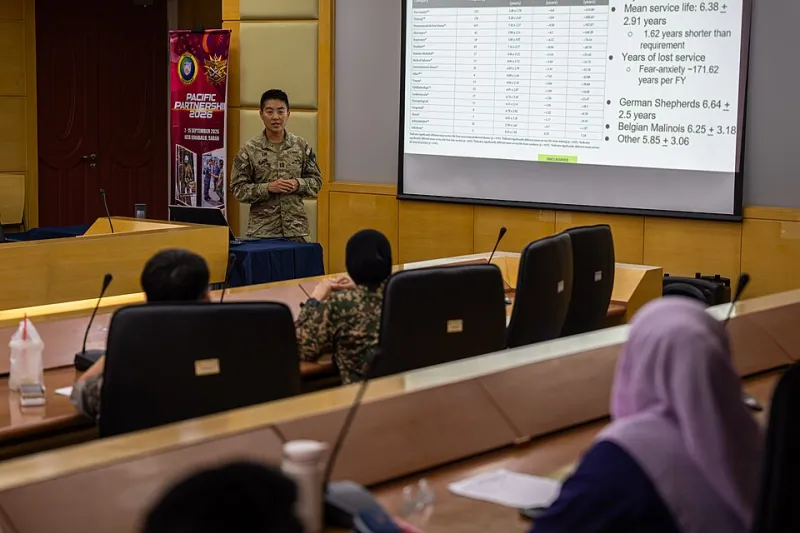
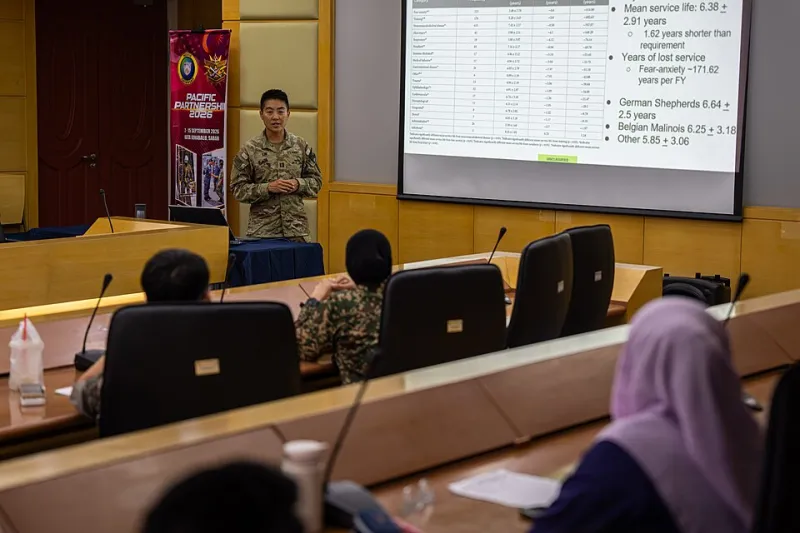
Photo: U.S. Navy photo by Petty Officer 2nd Class Moises Sandoval, Public domain, via Wikimedia Commons
For the better part of two decades, the H-1B lottery has functioned as a kind of gatekeeper for Malaysian professionals with ambitions tied to the American economy. The annual scramble for a limited pool of visas, combined with employer sponsorship requirements and multi-year processing timelines, has discouraged many highly qualified individuals from pursuing US-based opportunities altogether. Yet a quiet shift is underway. Across industries ranging from software engineering to financial consulting to UX design, Malaysian professionals are building substantive careers with US companies — and doing so entirely outside the traditional immigration pipeline.
This is not a story about shortcuts or legal ambiguity for its own sake. It is a story about structural changes in how work is organized globally, and how a well-connected, technically sophisticated professional community is adapting to those changes in real time.
The Architecture of the Alternative
Three distinct pathways have emerged as the most commonly used by Malaysian professionals seeking to engage with the US market without relocating or pursuing employer-sponsored visas.
The first is independent contractor status. Under US tax law, a foreign national residing outside the United States who performs services entirely outside US borders is generally not subject to US income tax on those earnings. This means a Malaysian software developer contracted by a San Francisco startup to build a product feature is, in most straightforward scenarios, operating within a legally sound arrangement — provided the engagement is structured correctly. The keyword here is "structured." Misclassification risks, improper payment routing, and ambiguous scope-of-work agreements can create compliance problems for both parties. Professionals pursuing this route are strongly advised to work with legal and tax advisors familiar with both Malaysian and US regulations.
The second pathway involves remote employment through employer-of-record (EOR) platforms. Companies such as Deel, Remote, and Rippling have built infrastructure specifically designed to allow US businesses to hire talent in countries like Malaysia without establishing a local legal entity. The Malaysian professional is employed by the EOR's local entity, receives a locally compliant employment contract, and delivers work to the US client company. This arrangement has grown substantially in popularity since 2020 and has normalized the idea of full-time, benefits-inclusive employment with American companies for professionals who remain based in Kuala Lumpur, Penang, or Johor Bahru.
The third pathway — smaller in scale but growing — involves digital nomad visa programs in third countries. A Malaysian professional who spends a portion of the year in Portugal, Costa Rica, or the UAE on a designated remote work visa can, in some cases, access a different tax residency status that simplifies their engagement with US clients. This is a more complex arrangement and is genuinely dependent on individual circumstances, but it represents a real option for those whose work and lifestyle allow for geographic flexibility.
Tax Implications: The Detail That Matters Most
The appeal of these pathways is real, but the tax dimension is where many professionals encounter unexpected complications. Malaysia's territorial tax system means that income earned from foreign sources and remitted into Malaysia has historically been exempt from local tax — though this exemption has been subject to regulatory updates in recent years, and professionals should verify current rules with a qualified Malaysian tax advisor.
On the US side, the Internal Revenue Service has clear guidance on payments made to foreign contractors: withholding obligations depend on the nature of the income, whether it is considered US-source income, and whether a tax treaty applies. The US-Malaysia tax treaty, while limited in scope, does provide certain protections worth understanding. The practical upshot is that professionals earning income from US companies need to maintain clean documentation — contracts, invoices, and records of where services were physically performed — to support their tax positions in both jurisdictions.
What This Looks Like in Practice
Consider a scenario familiar to many SP Society Malaysia members: a mid-career data engineer in Kuala Lumpur, with seven years of experience and strong credentials, is approached by a US-based fintech company through LinkedIn. The company needs someone to build and maintain their data pipeline infrastructure. Rather than initiating an H-1B sponsorship process — which would take years and offer no guaranteed outcome — both parties agree to a contractor arrangement. The engineer invoices monthly through a Malaysian-registered sole proprietorship, the fintech company processes the payment as a vendor expense, and the engagement proceeds.
This is not exceptional. Variations of this scenario are playing out across the Malaysian professional community at a scale that warrants serious attention from both career advisors and policy observers.
The Limits of This Model
It would be misleading to present these pathways as universally applicable or without meaningful constraints. Contractor arrangements, by their nature, do not include the employment benefits — health insurance, retirement contributions, equity vesting schedules — that often accompany full-time US employment. Career progression within a US company's internal hierarchy is also more difficult from a remote contractor position. And while EOR platforms have made remote employment more accessible, not every US company is willing or operationally equipped to use them.
There is also the matter of presence. Certain roles, particularly in regulated industries such as healthcare, defense, and financial services, require physical presence in the United States or security clearances that are effectively inaccessible to non-residents. These are not pathways without ceilings.
A Strategic Lens for Malaysian Professionals
What these alternative pathways represent, at their core, is optionality. The H-1B is not disappearing, and for many professionals, relocation to the United States remains a genuine goal. But the binary choice between "immigrate or miss out" no longer accurately describes the landscape. Malaysian professionals with the right skill sets — and the right professional networks to surface these opportunities — now have meaningful access to US market compensation, US company experience, and US professional relationships, all while remaining based in Malaysia.
SP Society Malaysia exists precisely to help members navigate this kind of complexity. Understanding the legal frameworks, connecting with peers who have successfully structured these arrangements, and accessing advisors who understand both markets are the kinds of resources that transform an abstract possibility into a concrete career strategy.
The queue for the H-1B lottery will continue. But an increasing number of Malaysian professionals are no longer waiting in it.