The KL-to-US Corridor: How Malaysian Entrepreneurs Are Building American Ventures Without Leaving Home Behind
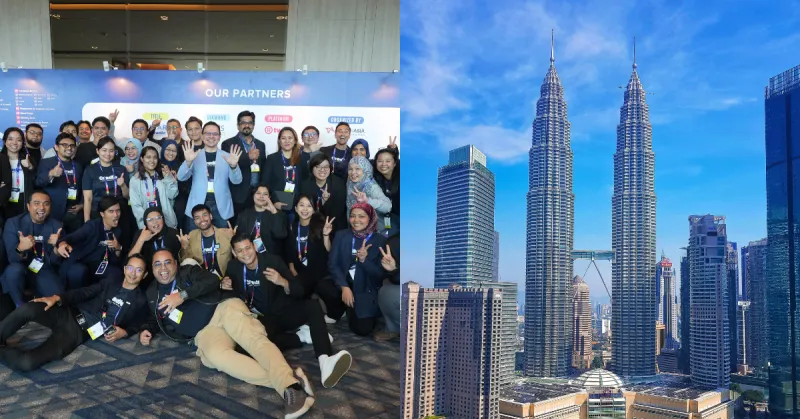
Photo: Malaysian entrepreneur laptop video call startup office Kuala Lumpur skyline, via vulcanpost.com
For decades, the story of Malaysian professional ambition followed a familiar arc: study hard, secure a visa, relocate to the United States, and measure success by how completely you had established yourself abroad. The implicit bargain was one of substitution—you traded Kuala Lumpur for San Francisco, or Petaling Jaya for Austin, and you built your life in one place or the other.
That bargain is being renegotiated.
Across the Malaysian professional community, a distinct and increasingly deliberate trend is taking shape. Entrepreneurs, senior technologists, and venture-backed founders are establishing US entities—Delaware C-corps, Silicon Valley-registered startups, New York-based holding companies—while simultaneously maintaining substantive operations, investment activity, and professional influence in Malaysia. This is not a compromise position. For many of them, it is the strategy.
Why the Timing Is Right
Several forces have converged to make the dual-market model not only viable but strategically advantageous.
The most obvious is the pandemic-era normalization of remote work. What began as a crisis accommodation has matured into a structural shift in how American companies think about where talent lives. A founder based in Kuala Lumpur who is running a US-registered SaaS company with American customers is no longer an anomaly. They are, increasingly, unremarkable—which is exactly the kind of legitimacy this model needed to scale.
The second force is capital. US venture capital has become significantly more geographically agnostic over the last five years. Investors who once required portfolio companies to be headquartered within driving distance of Sand Hill Road now routinely back founding teams distributed across multiple continents. For Malaysian entrepreneurs who can demonstrate US market traction and a credible American corporate structure, the geographic barrier to fundraising has dropped substantially.
The third force is infrastructure. Tools like Stripe Atlas, Mercury, and Clerky have made it genuinely straightforward to incorporate in Delaware, open a US business bank account, and establish the legal scaffolding of an American company—all without boarding a plane. What once required a US-based attorney and months of paperwork can now be completed in days.
The Professionals Building This Corridor
The individuals driving this trend are not a monolithic group. They range from second-time founders who sold their first Malaysian startup and are now targeting the US market, to senior engineers who left large American tech companies and are building their own ventures with the networks they cultivated while working there, to investment professionals who are structuring funds with US limited partners while deploying capital into Southeast Asian opportunities.
What they share is a particular kind of strategic clarity: they understand that the US market offers scale, capital access, and brand credibility that is difficult to replicate elsewhere, while Malaysia offers cost efficiency, deep talent pools, and proximity to one of the world's fastest-growing economic regions.
Azri Hashim, a Malaysian founder who incorporated his cybersecurity firm in Delaware in 2021 while keeping his engineering team in Kuala Lumpur, articulates the logic plainly: "My customers are in the US. My investors are in the US. My brand needs to be American. But my costs, my talent, my family—they are in Malaysia. Why would I give up either side of that equation?"
His company reached $2 million in annual recurring revenue within eighteen months of incorporation. His team of twelve engineers operates out of a co-working space in Mont Kiara.
Navigating the Visa Dimension
The dual-market model does not eliminate visa complexity—it reframes it. For Malaysian professionals who are building US companies without residing in the United States, the immediate immigration pressure is reduced. They do not require H-1B sponsorship. They are not in a queue. They are building something.
However, as their US businesses grow, most will eventually want or need a physical American presence. This is where strategic planning becomes essential. The most commonly pursued pathways for Malaysian entrepreneurs in this position include the O-1A visa for individuals with extraordinary achievement in their field, the E-2 treaty investor visa (which Malaysia does participate in through certain treaty arrangements), and the EB-1C green card for multinational executives and managers—available to founders who have been employed in a senior capacity by their own company's foreign affiliate.
The critical insight is that building a dual-market business over several years creates a documented track record that strengthens applications for all of these pathways. Revenue, US customer relationships, American employees or contractors, and press coverage in US publications all constitute evidence that immigration attorneys can work with.
Timezone as Competitive Advantage
One underappreciated dimension of the KL-to-US model is the temporal one. Kuala Lumpur sits in the UTC+8 timezone, which means that a Malaysian professional's working day ends just as the US East Coast workday is beginning. For founders managing US customer relationships, this creates a natural follow-the-sun rhythm. Customer issues that arise during US business hours can be addressed by the Malaysian team overnight, enabling response times that US-only competitors cannot match without expensive shift staffing.
Several Malaysian-founded US companies have turned this into an explicit service differentiator—marketing their global team structure as a feature rather than a footnote.
Maintaining Roots While Building Reach
Beyond the business mechanics, the dual-market model carries a cultural and personal dimension that matters enormously to the Malaysian professionals pursuing it. For many, the traditional immigration narrative required a kind of severance—from family, from community, from the particular texture of life in Malaysia. The KL-to-US corridor offers an alternative: global professional ambition that does not demand the sacrifice of belonging.
This is where professional networks like SP Society Malaysia play a role that extends beyond career resources. For Malaysian entrepreneurs operating across both markets, having a community that understands the specific challenges of that position—the tax implications, the cultural navigation, the personal duality—is genuinely valuable. Peer connections with others who have structured similar arrangements, managed similar investor conversations, or negotiated similar cross-border contracts compress the learning curve significantly.
A New Definition of Success
The most significant thing the KL-to-US corridor represents may be conceptual rather than practical. It is a refusal to accept that professional ambition and cultural rootedness are in tension. The Malaysian professionals building this model are not hedging. They are not unable to commit. They are constructing something more sophisticated than the binary their parents' generation was offered.
They are building American companies. They are keeping their Malaysian lives. And they are demonstrating, with considerable evidence, that these two things make each other stronger.