Teh Tarik Before Business Cards: What the Mamak Stall Knows About Networking That America Forgot
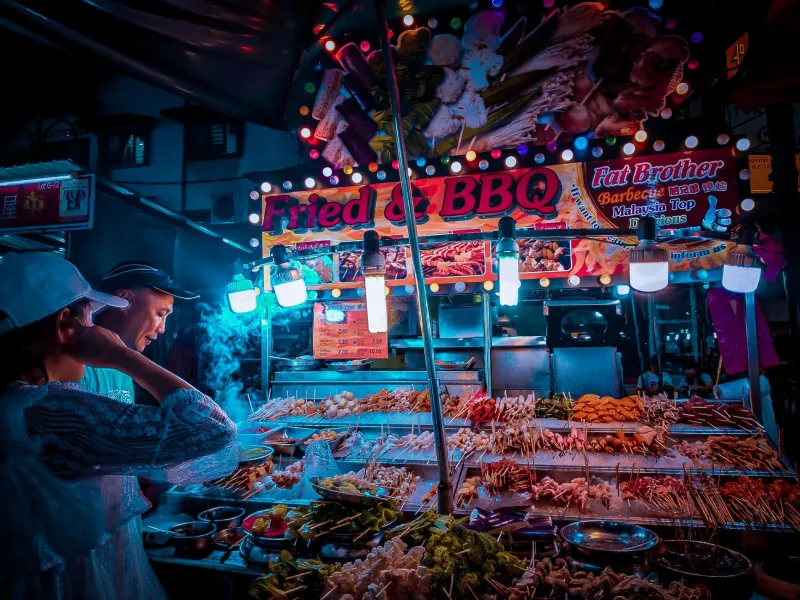
There is a scene repeated nightly across Kuala Lumpur that no American networking event has ever successfully imitated. A group of colleagues, some former classmates, a few strangers folded in by a friend of a friend—seated at a plastic table outside a mamak stall at 10 p.m. Roti canai arriving in stages. Teh tarik poured in that long, theatrical stretch from cup to can. Nobody has an agenda. Nobody is leaving early.
American professionals have started to talk about this, in their own vocabulary. The 'third place'—neither home nor work—has become a hot topic in urban planning newsletters and LinkedIn think pieces. Malaysians could have told them years ago. The mamak stall was never a trend. It was infrastructure.
Why the Mamak Model Works
The genius of kopitiam and mamak culture is not the food, though the food helps. It is the structure of the interactions themselves, which follow rules almost perfectly opposite to the American networking event.
Repetition over intensity. You do not meet someone once at a mamak stall. You meet them every week for years. Relationships are built in dozens of shallow, warm interactions rather than one deep, awkward one. Trust accumulates the way sediment does—gradually, and permanently.
No transaction on the table. Nobody at the mamak stall is there to 'get something.' Business emerges from the relationship, often months or years later, and almost always sideways—a referral, a partnership, a warning about a bad deal. Because no one is selling, everyone is buying.
Time is the currency. A mamak session cannot be rushed, and everyone knows it. The unhurried-ness is not laziness; it is the filter. People who will invest three unhurried hours in a conversation are people worth knowing.
Hierarchy dissolves at the plastic table. A director and a junior executive share the same table, the same roti, the same bill-splitting ritual. Familiarity across rank is precisely what American networking claims to want and rarely achieves.
What This Means on American Soil
For US professionals, the lesson is not to find a mamak stall—though the mamak restaurants of Queens, Chicago, and the Bay Area are doing their part. The lesson is to change the structure of how relationships get built.
- Trade the mixer for the standing invitation. A monthly coffee with the same five people beats a quarterly event with two hundred.
- Remove the ask. If every interaction has a purpose visible on your end, people will feel it. Let some conversations have no purpose at all.
- Choose repeat venues. Become a regular somewhere. Recognition, over time, does what icebreakers never can.
- Let the late hours do their work. Some of the most consequential professional conversations in Malaysian history happened after 10 p.m. over glasses that kept being refilled.
A Word for Malaysian Transplants
If you are a Malaysian professional in the US feeling that American networking is hollow, you are not imagining it. You were raised on a superior model. The instinct to dismiss it as 'not real networking' is worth resisting—instead, translate it.
Host the mamak table. Be the person who organizes the recurring dinner, the standing Saturday brunch, the unstructured gathering where nobody is asked what they do. Americans are starved for exactly what you already know how to build.
The teh tarik is optional. The patience is not. Real networks, in any country, are poured slowly—and pulled long.