Giving Without Receiving: Why Malaysian Professionals Must Unlearn the Habit of One-Sided Mentorship

There is a particular kind of professional you will find in nearly every mid-sized American company that employs Malaysian talent. They are the ones colleagues approach when a project feels overwhelming, when a presentation needs a second set of eyes, or when a junior analyst needs someone to talk them through a difficult client situation. They give their time generously, follow up without being asked, and ask for nothing in return. They are, by every reasonable measure, exceptional mentors.
And yet, when you ask those same professionals whether they have a senior sponsor advocating for their next promotion, the answer is almost always no.
This is not a coincidence. It is a pattern—one rooted in cultural conditioning that serves Malaysian professionals beautifully in some contexts and quietly undermines them in others. Understanding that pattern is the first step toward dismantling it.
Why Mentoring Others Comes Naturally
Malaysian professionals grow up in environments where collective advancement is valued over individual achievement. In schools, workplaces, and communities shaped by a blend of Malay, Chinese, Indian, and broader Southeast Asian values, looking after those who are less experienced is not framed as a strategic career move. It is simply what responsible people do.
This instinct follows Malaysian professionals into US workplaces. When they see a junior colleague struggling, the response is immediate and unconditional. There is no calculation about what the relationship might yield. There is no hesitation rooted in concern about appearing too available. The help is offered because it is needed, and that is reason enough.
American organizations benefit enormously from this quality. Research consistently shows that informal mentorship—the kind that happens outside of structured HR programs—has a measurable effect on employee retention and engagement. Malaysian professionals deliver this informally, organically, and at scale. They are a genuine organizational asset.
The problem is that this generosity rarely flows in both directions.
The Cultural Barrier to Seeking Help
Asking for guidance from a senior leader in a Malaysian professional context carries a specific social weight. It can feel presumptuous—as though you are placing a burden on someone whose time is more valuable than your own. There is a deeply embedded sense that you should demonstrate your readiness before asking for access, that you should earn visibility before requesting it, and that expressing ambition too directly risks being perceived as arrogant or ungrateful.
In a Malaysian context, these instincts are not irrational. They reflect genuine social norms around hierarchy, humility, and patience. The expectation is often that if you work hard enough and long enough, the right people will notice and opportunities will follow.
In the United States, that expectation is frequently wrong.
American corporate culture—particularly in sectors like technology, finance, and consulting—operates on a different set of assumptions. Ambition is expected to be visible. Asking for mentorship or sponsorship is not considered presumptuous; it is considered self-aware. Senior leaders often actively want to be approached by high-potential professionals, because sponsoring someone's rise reflects well on their own judgment and legacy. The professionals who advance most quickly are rarely those who wait to be discovered. They are the ones who made their ambitions legible and then built the relationships to support them.
Malaysian professionals, conditioned to give rather than ask, often miss this entirely.
The Asymmetry and Its Consequences
The result of this imbalance is a career trajectory that looks strong from the outside but stalls at a predictable ceiling. Malaysian professionals tend to receive excellent performance reviews. They are trusted, liked, and respected. They are given more responsibility because they have demonstrated they can handle it. But they are frequently overlooked for senior roles because the decision-makers who control those opportunities do not know them well enough to champion them.
Sponsorship—the act of someone with organizational power actively advocating for your advancement—requires a relationship. It requires that a senior leader knows not just your work, but your goals, your potential, and your readiness. That relationship does not develop through competence alone. It develops through deliberate, sustained engagement.
Many Malaysian professionals have never initiated that engagement. Some have never considered that it was their responsibility to do so.
Reframing Help-Seeking as Reciprocal Investment
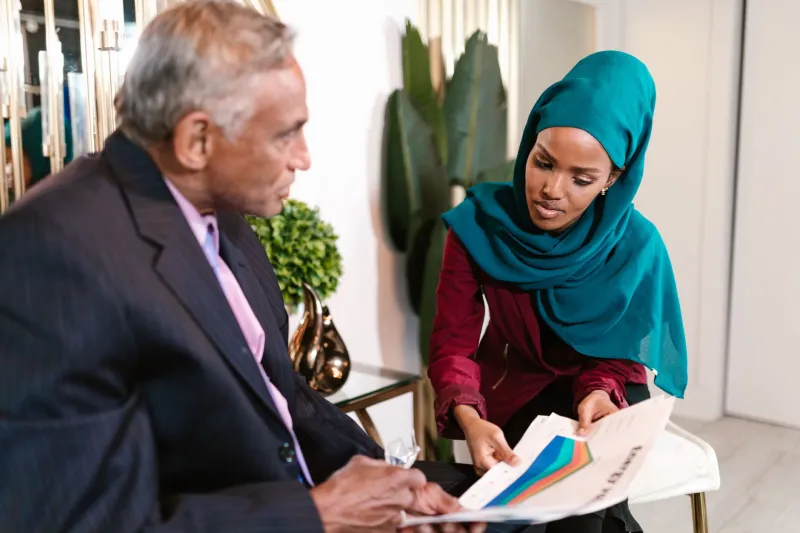
One of the most effective shifts a Malaysian professional can make is to stop thinking about seeking mentorship as asking for a favor and start thinking about it as offering an investment opportunity.
Senior leaders who mentor or sponsor others gain something real from the exchange. They gain insight into how the organization looks from different vantage points. They gain a trusted perspective from someone who may bridge cultural or generational gaps they cannot bridge themselves. They gain the satisfaction of contributing to someone's growth, which is among the most consistently cited sources of meaning for experienced professionals. And they gain a relationship with someone who is, in many cases, unusually capable.
When you approach a senior leader with genuine curiosity about their career, their perspective on the industry, or their view on a challenge you are navigating, you are not asking them to carry you. You are inviting them into a conversation that has value for both parties. That reframe is not just psychologically useful—it is also accurate.
Practical Steps for Building Upward Relationships
For Malaysian professionals who recognize this pattern in themselves, the path forward does not require abandoning the values that make them effective mentors. It requires extending those same values upward.
Start with curiosity, not requests. Rather than approaching a senior leader with an ask, begin by expressing genuine interest in their experience. Ask about a decision they made that you observed from a distance, or about how they navigated a transition in their career. People at every level respond to authentic interest.
Make your goals known incrementally. You do not need to declare your five-year plan in a first conversation. But over time, the people around you should understand what you are working toward. If they do not, they cannot help you—even if they would want to.
Leverage the mentorship you already provide. If you are already developing junior colleagues, you have demonstrated the capacity to invest in relationships across levels. Apply that same consistency upward. Check in with a senior contact. Share something relevant to their interests. Maintain the relationship between asks.
Accept help when it is offered. Many Malaysian professionals deflect offers of support out of habit. When a senior colleague offers to introduce you to someone, or to put your name forward for a project, say yes. Accepting gracefully is not the same as being indebted. It is the beginning of a reciprocal professional relationship.
The Broader Implication for Malaysian Professionals in America
The mentorship paradox is not a personal failing. It is a cultural translation problem—and like all translation problems, it is solvable once you understand what is being lost in the gap.
Malaysian professionals bring an orientation toward collective growth that American workplaces genuinely need. The goal is not to abandon that orientation but to make it complete. A professional who invests in those below them while also building relationships with those above them is not abandoning their values. They are applying those values with greater range.
At SP Society Malaysia, we believe that the professionals who advance most meaningfully are those who understand the full architecture of professional relationships—not just the ones that feel comfortable, but the ones that require a small act of courage. Asking for guidance is that act. It is time more Malaysian professionals made it.